
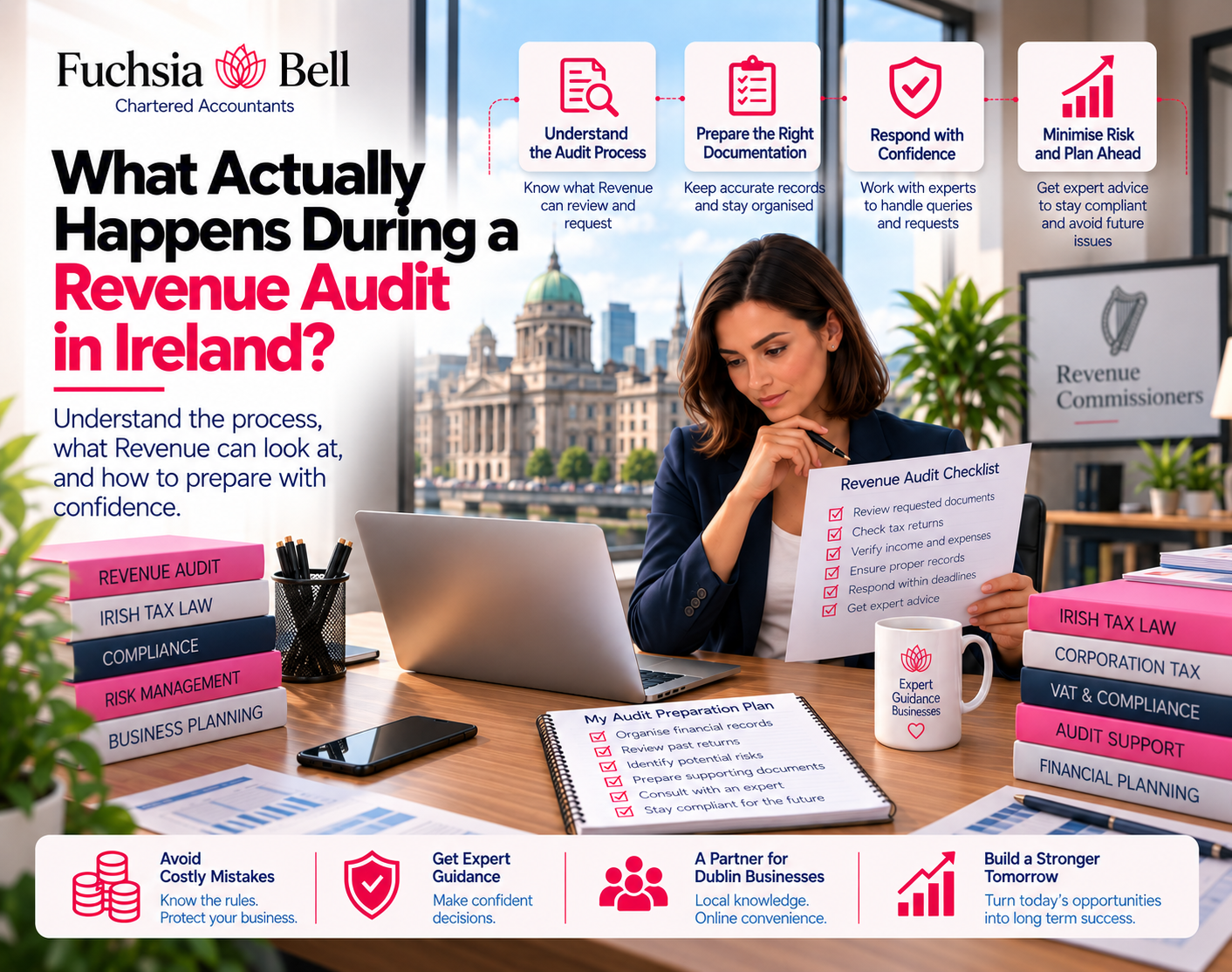
A Revenue audit is a formal examination of a taxpayer’s returns, books, and records. Most people have a vague sense that it involves Revenue going through everything carefully. The reality is both more structured and more manageable than that, provided the records are in order and the approach is correct from the start.
How Revenue Selects Who to Audit
Revenue uses a risk-based selection model. The factors include discrepancies between returns, industry norms for the type of business, high expenses relative to income, patterns across previous years, and third-party data such as property registry information, bank account data, and platform earnings reports. A small number of audits are random. The majority are targeted on the basis of specific risk indicators.
The Audit Notification Letter
Revenue issues a formal notification letter giving 21 days’ notice for a field audit. The letter specifies the tax head being examined, whether income tax, corporation tax, VAT, PAYE, or a combination, the period under review, and the scheduled date. Receiving this letter is the signal to begin assembling records, not the moment to discover they are missing.
Desk Audit vs Field Audit
A desk audit is conducted by correspondence. Revenue sends a list of specific queries and requests records or explanations in writing. A field audit involves a Revenue officer visiting the business premises to review records on site. Field audits are used where the issues are more complex or where physical inspection of documents is necessary. The bookkeeping records a business maintains determine how quickly either type of audit can be answered.
What a Voluntary Disclosure Does to the Penalties
| Disclosure Type | Penalty Range |
|---|---|
| Qualifying disclosure before audit notification | 3% to 10% of unpaid tax |
| Disclosure during the 21-day notice period | Up to 20% of unpaid tax |
| No disclosure, full cooperation during audit | Up to 55% of unpaid tax |
| No disclosure, limited cooperation | Up to 100% of unpaid tax |
Before an audit begins, a taxpayer can make a qualifying voluntary disclosure, declaring any under-reported income or incorrectly claimed reliefs and paying the outstanding tax liability. Acting before the notification letter arrives makes the single largest difference in penalty exposure.
What Revenue Examines
For income tax and corporation tax, Revenue typically looks at turnover figures, cash receipts against lodgements, expenses claimed, particularly any personal elements, travel, and phone, benefit-in-kind positions, and pension contributions. For VAT, input tax claims are checked against purchase invoices and output tax is matched against sales records. PAYE audits focus on employee benefits and the treatment of director expenses.
How the Outcome Is Communicated
At the end of a field audit, Revenue issues a settlement letter setting out additional tax due, interest charged at the daily rate of 0.0219%, and the applicable penalty. The settlement must be agreed and paid within a specified period. A taxpayer who disagrees with the settlement can appeal through Revenue’s internal review process or to the Tax Appeals Commission. For company directors, personal exposure does not necessarily end when the company’s audit is settled.
Questions About Revenue Audits in Ireland
Can I bring my accountant to a Revenue audit?
Yes. You have the right to be represented by your accountant, tax adviser, or solicitor at a field audit. Having professional representation is strongly advisable where the amounts involved are significant.
How far back can Revenue go?
Revenue can generally go back four years for routine cases. Where there is fraud or neglect, the period is unlimited. In practice, most audits cover the three most recent tax years.
What records do I need to have ready?
Sales records and invoices, purchase invoices, bank statements for all accounts, payroll records, and documentation for any claims made. Businesses must keep records for six years under Irish tax law.
What is the difference between a Revenue intervention and a full audit?
Revenue distinguishes between a full audit, a profile interview, and desk-based interventions. A profile interview is less formal and used to gather information rather than establish a liability. A formal audit has defined legal procedures and full penalty exposure attached.
Does Revenue audit PAYE employees as well as businesses?
Yes. PAYE employees can be audited, particularly where there is significant non-PAYE income, rental property, multiple employments, or a high level of credits claimed.
What happens if I cannot find all my records?
Revenue will typically use third-party data or estimated figures where records are incomplete. Estimates tend to favour Revenue. Reconstructing records from bank statements before the audit visit is better than arriving with gaps.
Does an audit settlement appear on a public list?
Settlements above the publication threshold are listed on Revenue’s quarterly Tax Defaulters list, available on the Revenue website. The threshold from 2024 is a combined settlement of over €50,000 in tax, interest, and penalties.
Can I settle without going through the full audit process?
For straightforward cases with small amounts involved, Revenue sometimes concludes an intervention without issuing a formal settlement letter. This is more common for desk-based interventions than for full field audits.
Getting to a Clean Position Before It Arrives
The businesses that handle audits most cleanly are the ones that maintain records systematically and have no large backlog of unexplained items in their accounts. An audit is genuinely manageable when the documentation supports the return. It becomes significantly harder when it does not.
How We Prepare Clients for Revenue Audits
We assist clients at both the pre-audit voluntary disclosure stage and through the audit process itself. Where we identify a gap during a tax review, we raise the voluntary disclosure question before any notification arrives, because the difference in penalty exposure between acting early and waiting is substantial. Details of our tax return services and how we approach Revenue interventions are covered on fuchsiabell.ie. For Irish businesses wanting a second opinion on their tax position before an audit arrives, geroconnor.info covers the advisory service in detail.